
Valentine’s Day originated from a blend of ancient Roman Fertility rituals (Lupercalia) held in mid-February and Christian efforts to honor martyr St. Valentine. Romantic celebrations then became the evolution during the Middle Ages.
Roman Festival of Lupercalia was held from Feb. 13-15. This festival consisted of purifying the city, sacrificing animals, and pairing young women with young men by lottery, promoting fertility and to ward off evil.
The Catholic Church recognized multiple martyrs named Valentine. A prominent legend suggested St. Valentine who was a Roman priest who defied Emperor Claudius II’s ban on marriage for soldiers, secretly marrying couples before his execution on Feb. 14.
The association with romantic love grew during the Middle Ages, partly due to the belief that birds began to mate on Feb. 14. The linked St. Valentine’s Day with romantic love in his writing.
Richard Cadbury introduced the first box of chocolates for Valentine’s Day in the late 1800s. More than 36 million heart-shaped boxes of chocolates are sold every year.
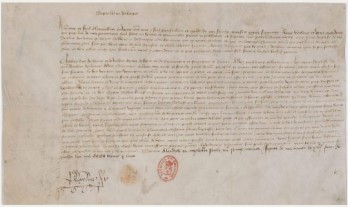
The oldest surviving love poem is on a 3500 BC Sumerian clay tablet, but the oldest written valentine was a 1415 poem by a French duke in prison. The oldest known written valentine is a poem composed in 1415 by Charles, Duke of Orleans, to his wife, Bonne of Armagnac, while he was imprisoned in the Tower of London following his capture at the Battle of Agincourt. The French rondeau refers to her as his "very gentle Valentine."
Before candy hearts became sweet treats, they were originally medical lozenges in the 1800s. Candy hearts, or conversation hearts, originated in 1866 as "motto lozenges" created by NECCO. Originally scallop-shaped, they evolved into the iconic heart shape around 1901–1902. Roughly eight billion are produced annually, featuring short, updated phrases like "Be Mine," and they have a shelf life of up to five years.

Cupid is the Roman god of desire and affection commonly depicted as a winged, chubby boy armed with a bow and arrows to peirce hearts. As the son of Venus (goddess of love) and Mars (god of war) or Mercury, he represents the volatile nature of love. He is the Roman equivalent of the Greek god Eros. Cupid uses two types of arrows—golden ones to incite love and leaden ones to cause hatred or repulsion. He is often portrayed blindfolded to represent the blind nature of love.

In the 1840s, people sent "Vinegar Valentines"—mean-spirited cards designed to reject suitors. Vinegar valentines were popular, often-nasty anonymous cards sent during the Victorian era and early 20th century, serving as the opposite of traditional romantic Valentines. Featuring crude, insulting caricatures and poems, these cards targeted recipients' appearances, habits, or professions. They were inexpensive, mass-produced, and sent to express dislike or reject suitors.
From ancient Roman Rituals to modern boxes of chocolates, Valentine’s Day has undergone a fascinating transformation. What began as the rugged festival of Lupercalia and the solemn sacrifice of Christan Martys eventually blossomed into a season of romance, fueled by the poetry of Chaucer and the traditions of the Middle Ages. Today, the holiday blends deep historical roots with sweet modern customs like Cadbury chocolates and candy hearts.